
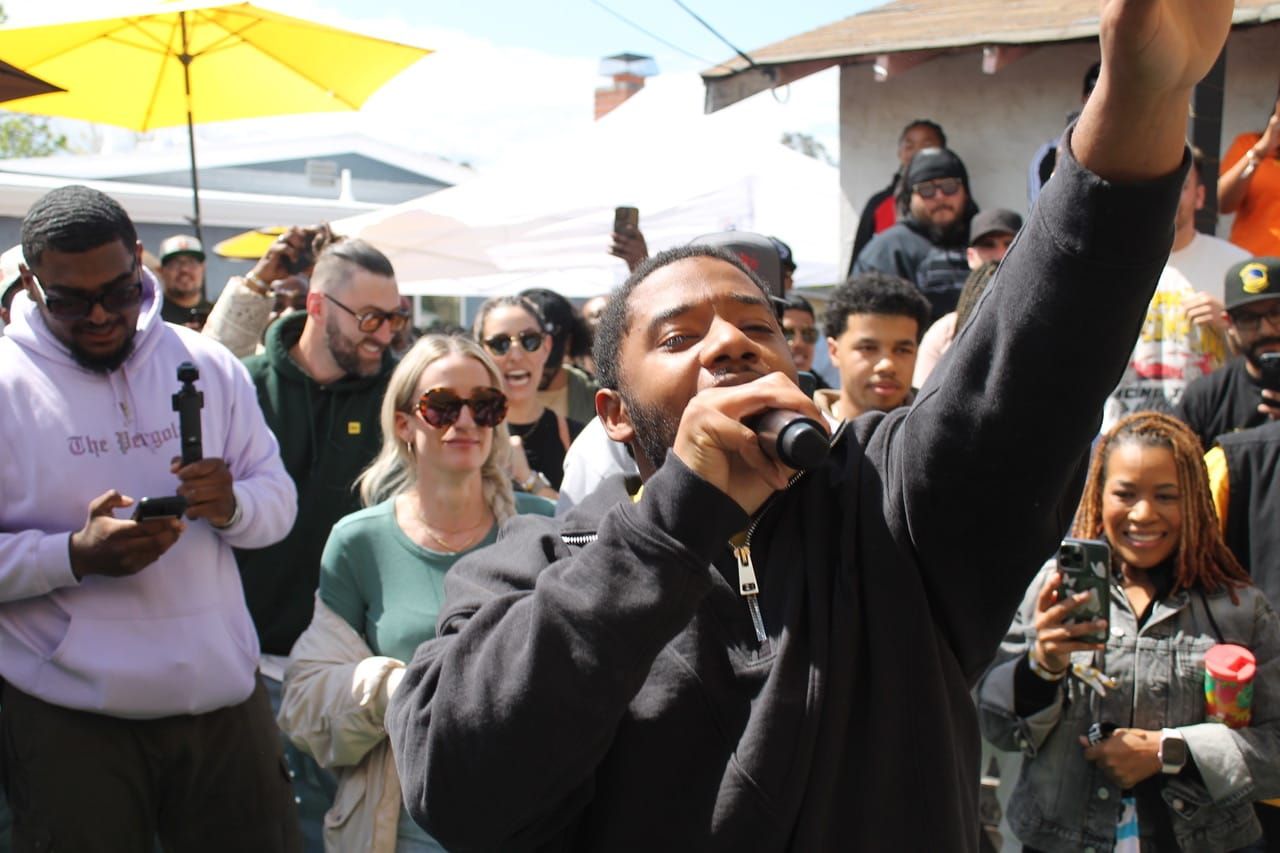
LaRussell built a venue where most people saw a fence, some grass and a regular Vallejo house.
Now he is proving the Backyard was never supposed to stay in the backyard.
A new Reel from the Pergola crew shows the philosophy in motion: live music, free food, free drinks and the kind of crowd energy that disappears when an artist is separated from the people by barricades, bottle service and a six-figure production wall.
The Backyard Is a Feeling, Not an Address
LaRussell's original Backyard Residency came out of a simple act of independence. If established venues controlled the calendar, the money and the distance between performer and fan, he would create his own room.
That room happened to be the yard of his childhood home.
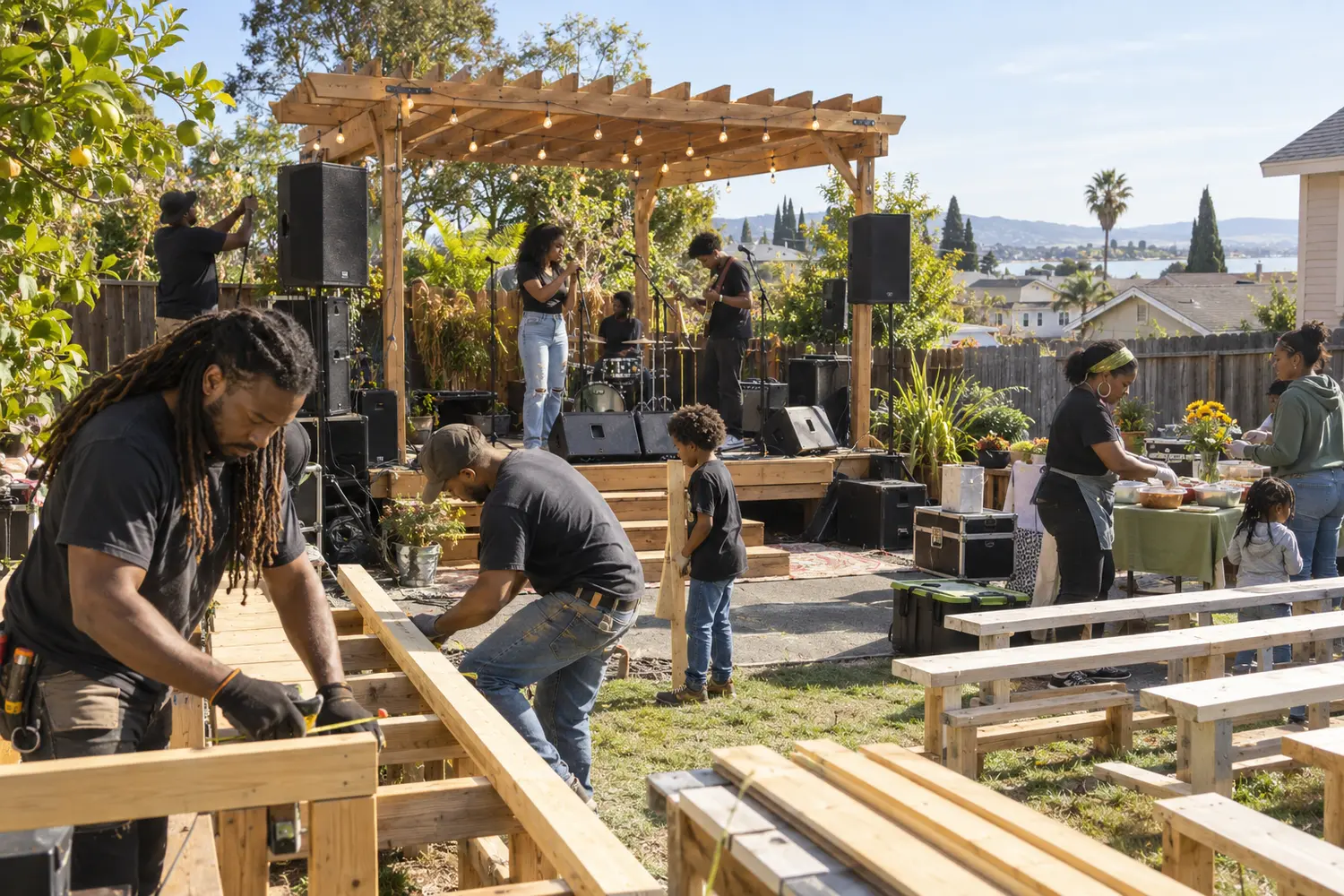
The Pergola grew into an all-ages neighborhood festival with a live band, food, merchandise, family, bleachers and a stage close enough for fans to look the rapper in his eyes. The Vallejo Sun described it as an all-age festival wrapped inside an ordinary bungalow's yard. That contrast became the magic. Read the Vallejo Sun profile
The newest chapter takes the concept outside its original fence. That does not dilute the idea. It confirms that the real product was never real estate. It was trust, access and a community willing to build the experience together.
DIY Does Not Mean Small
The industry has a habit of confusing independence with limitation.
LaRussell treats independence as control over the relationship. Fans can see how the show is built. They can stand next to the band. They can eat with the family. They can pay what they believe an experience is worth, and in some versions of the model, buy into something deeper than a disposable ticket.
That is street-level audience ownership. No mystery funnel. No pretending the supporter is just a streaming statistic. The artist knows who showed up, and the people know where their money went.
It also explains why LaRussell's story belongs at the center of Bay Area rap history. From Too $hort selling tapes out of the trunk to E-40 building Sick Wid It, the Bay has always produced artists who turn a lack of industry permission into a business model. LaRussell is working from the same regional operating system, updated for direct-to-fan platforms, social video and community experiences.
And the Music Has Not Slowed Down
The business ideas would not matter if the records stopped moving.
LaRussell's latest listed release is “29 BEHIND,” a compact August 8 single produced with Hokage Simon and ClayDough. At one minute and 53 seconds, it moves with the urgency of an artist who has never believed every thought needs a twelve-week rollout. The visual was directed by LaRussell and produced through Good Compenny. Hear LaRussell's latest releases
Earlier in 2026, he linked with Lil Jon for the 14-song Something's in the Water. The title says what Bay artists have argued for decades: the region's sound cannot be reduced to one era, one dance or one city. The album pulls Southern crunk energy into LaRussell's conversational Vallejo delivery without making him sound like a visitor in somebody else's world.
“I'm From the Bay,” “Wigglin,” “I Got Flavor!” and “Hot Summer Night” make the record feel like a moving function. Even the release strategy carried the independent message—the project was offered directly to listeners with a pay-what-you-want floor and a stated goal of moving 100,000 albums. Explore Something's in the Water
Vallejo Is Not the Backdrop. It Is the Source.
LaRussell's most important creative decision may be the one he keeps making: going home.
His work does not treat Vallejo as a struggle story to escape and revisit after success. The neighborhood is the studio, venue, audience, test market, production company and proof of concept.
That is why his appearance on “Soul of Vallejo” from E-40's 2026 quadruple album feels bigger than a feature credit. It connects two versions of the same Bay tradition. One generation sold records from the trunk and built a language the world borrowed. The next is building stages beside the house and teaching artists that distribution is not the same thing as ownership.
The September 6 Backyard Residency date in Vallejo carried the model into another season, while upcoming dates show the experience traveling beyond its home base. The blueprint is becoming a format. See the September residency listing
LaRussell did not wait for the industry to build him a bigger stage. He made the community the venue—and now the venue can travel.
New music, portable community and a Bay Area business model hiding in plain sight.